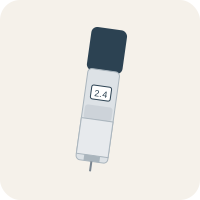
GLP-1 weight management
Ozempic
semaglutide / pronounced [sem a gloo' tide]
FDA-approved semaglutide for type 2 diabetes. Widely used off-label for weight loss.
- Manufacturer
- Novo Nordisk
- FDA approved
- 2017
- Pivotal efficacy
- 1.4–1.8% HbA1c reduction across SUSTAIN trials (1.0 mg dose) · SUSTAIN-6 (NCT01720446) — cardiovascular outcomes
FDA-approved for
- Type 2 diabetes
- Cardiovascular risk reduction (T2D + established CVD)
- Chronic kidney disease (T2D)
FDA Boxed Warning
Risk of thyroid C-cell tumors. Ozempic causes thyroid C-cell tumors in rats. Ozempic is contraindicated in patients with a personal or family history of medullary thyroid carcinoma (MTC) or in patients with Multiple Endocrine Neoplasia syndrome type 2 (MEN 2).
Why is Ozempic prescribed?
Ozempic is FDA-approved for type 2 diabetes and to reduce cardiovascular event risk in T2D patients. Same active ingredient as Wegovy (semaglutide) but typically prescribed at lower doses (0.25-2mg weekly vs Wegovy's 2.4mg). Off-label weight-loss use is widespread, especially during Wegovy supply constraints.
FDA-approved indications:
- Type 2 diabetes
- Cardiovascular risk reduction (T2D + established CVD)
- Chronic kidney disease (T2D)
How does Ozempic work?
Same mechanism as Wegovy — GLP-1 receptor agonist. Lowers blood glucose by improving insulin response to meals and slowing gastric emptying. Weight loss is a side effect of appetite suppression.
Who qualifies for Ozempic?
FDA-approved indication: adults with type 2 diabetes for glycemic control and CV risk reduction. Many telehealth platforms prescribe off-label for weight management when Wegovy is unavailable or insurance won't cover Wegovy.
Pre-treatment screening checklist:
- Confirm type 2 diabetes diagnosis (HbA1c ≥6.5% or established) — Ozempic is FDA-approved for diabetes, not obesity
- Screen for personal or family history of medullary thyroid carcinoma (MTC) or MEN2 — contraindication
- Verify no prior pancreatitis history; check baseline lipase if clinical suspicion
- Baseline labs: HbA1c, eGFR, lipid panel, retinal exam (especially for diabetic retinopathy progression risk)
- Review insulin and sulfonylurea regimen — dose reduction often needed to prevent hypoglycemia
- Counsel on hypoglycemia symptoms and treatment, especially in patients also on insulin
How should Ozempic be used?
0.25mg weekly for 4 weeks, then 0.5mg, then 1mg, max 2mg. Lower max dose than Wegovy (2.4mg).
What should I do if I forget a dose?
Ozempic is dosed once weekly. If missed: take within 5 days of scheduled day, then resume regular weekly schedule. If more than 5 days late, skip and continue regular schedule. Do not double up. For T2D patients, missed doses can affect glycemic control — check blood sugar more frequently if you've missed a dose. If you miss 2+ consecutive doses, contact your prescriber; dose adjustment may be needed when resuming.
How effective is Ozempic?
1.4–1.8% HbA1c reduction across SUSTAIN trials (1.0 mg dose)
- Trial:
- SUSTAIN-6 (NCT01720446) — cardiovascular outcomes
- Comparator:
- vs placebo, 26% reduction in major adverse cardiovascular events
- Participants:
- n = 3,297
What side effects can Ozempic cause?
Same as Wegovy. Same MTC/MEN2 contraindication.
What interactions should clinicians watch for?
Same interaction profile as Wegovy (same active ingredient). Most clinically meaningful: insulin and sulfonylureas (combined hypoglycemia risk — clinicians often reduce these when starting Ozempic), warfarin (monitor INR), oral contraceptives (effectiveness may reduce in patients with severe GI symptoms). Ozempic does not interact with metformin, statins, antihypertensives, or thyroid hormone at standard doses. Insulin co-administration is common in T2D regimens — dose adjustments are standard practice.
What special precautions should I follow?
Pregnancy & lactation
Ozempic is not recommended during pregnancy or while breastfeeding. Animal studies show developmental harm; no adequate human data. Discontinue at least 2 months before planned pregnancy (semaglutide's long half-life clears slowly). For T2D patients planning pregnancy, alternative diabetes management (insulin, metformin) is typically substituted. If you become pregnant unexpectedly on Ozempic, stop the medication and contact your prescriber promptly to transition to pregnancy-safe diabetes care.
Alcohol
No formal contraindication. T2D patients on Ozempic should be mindful of alcohol's blood-sugar effects (alcohol can cause hypoglycemia, especially when combined with insulin or sulfonylureas — and Ozempic adds to that risk). Slowed gastric emptying changes alcohol absorption. Moderate amounts (1 drink/day women, 2 men) are generally acceptable for stable T2D patients; check with your endocrinologist if you have other complications. Avoid drinking on empty stomach.
What does Ozempic cost?
List price ~$900-1,000/month. Diabetes coverage is generally better than weight-loss coverage — many insurance plans cover Ozempic with a T2D diagnosis at standard copay.
Cash price
List price approximately $935 per 28-day supply at retail pharmacies. Lower than Wegovy list price because the dose strength is lower at the diabetes-approved range (0.25–2.0 mg vs 2.4 mg for Wegovy).
With insurance
Diabetes indication generally has broader insurance coverage than obesity. Tier 2 placement common with prior authorization. Most commercial and Medicare Part D plans cover Ozempic for documented T2DM. Coverage may be denied if used off-label for weight management without T2DM.
Savings card
Novo Nordisk Ozempic Savings Card eligible commercial-insured patients can pay as low as $25/month for up to 24 months. Eligibility requires commercial insurance with Ozempic on formulary. Not eligible for Medicare, Medicaid, or other government insurance.
Direct-pay program
No formal cash-pay program from Novo Nordisk for Ozempic at the time of writing. Compounded semaglutide alternatives may be available through 503A compounding pharmacies in limited circumstances during FDA-declared shortage windows.
Patient assistance
Novo Nordisk Patient Assistance Program may cover Ozempic for qualifying uninsured patients at or below 400% of the federal poverty level. Application via NovoCare.
Brand names (same molecule)
semaglutide is marketed under multiple brand names with different doses or FDA indications.
Wegovy
Same molecule (semaglutide), FDA-approved for chronic weight management at higher 2.4 mg weekly dose. Different indication, different pen device, different cost structure.
Rybelsus
Oral semaglutide tablet, FDA-approved for type 2 diabetes. Daily dosing (7 or 14 mg). Lower bioavailability than injectable forms; absorption requires specific fasting timing.
Frequently asked questions
Can Ozempic be prescribed for weight loss?
Ozempic is FDA-approved for type 2 diabetes, not weight management. Clinicians sometimes prescribe Ozempic off-label for weight management when Wegovy is unavailable or denied by insurance, but this approach has complications: lower maximum dose (2.0 mg vs Wegovy 2.4 mg), insurance often denies coverage when used off-label, and the manufacturer Savings Card is not designed for off-label use. Patients seeking weight management benefit typically do better requesting Wegovy specifically.
Is Ozempic the same as Wegovy?
Same active ingredient (semaglutide), but different products. Ozempic is FDA-approved for type 2 diabetes at 0.25–2.0 mg weekly. Wegovy is FDA-approved for chronic weight management at higher 2.4 mg weekly. Different pen device, different labeling, different insurance coverage. The molecule is identical; the dose, indication, and pricing differ.
How much weight do diabetics lose on Ozempic?
In SUSTAIN-6 and SUSTAIN-7 trials, diabetic patients lost ~3–6% body weight on average over 56 weeks at the 0.5–1.0 mg doses. The 2.0 mg dose (approved in 2022) produces somewhat more weight loss, closer to ~7–9% body weight reduction. Weight loss on Ozempic is generally less than Wegovy because the maximum approved dose is lower.
Does Ozempic lower HbA1c?
Yes — that's its primary FDA-approved use. Trial data shows HbA1c reduction of ~1.0–1.5 percentage points from baseline at 30 weeks, depending on dose. The cardiovascular benefit (SUSTAIN-6 trial) extends to a documented reduction in major adverse cardiovascular events (MACE) in patients with T2DM and established cardiovascular disease.
Will I have to take Ozempic forever?
For type 2 diabetes, Ozempic is typically considered a chronic medication — like statins or antihypertensives. Discontinuation often leads to HbA1c rising and weight regain. Some patients in sustained remission with significant lifestyle changes may successfully taper or discontinue, but this is uncommon and should be done with close clinical monitoring.
What about the Ozempic shortage?
The FDA semaglutide shortage was declared resolved in late 2024. As of 2026, brand-name Ozempic supply is generally adequate. Compounded semaglutide alternatives that filled the shortage gap are being wound down by FDA enforcement; routine 503A compounding for semaglutide may continue in limited individualized cases but not at scale. Stick with brand-name Ozempic from authorized pharmacies for reliable supply.
Clinical pearls
- Hypoglycemia risk increases substantially with concurrent insulin or sulfonylurea — pre-emptively reduce insulin by 20–30% at initiation for most patients.
- Retinal screening matters: rapid HbA1c improvement (>1.5 pp drop in <6 months) increases short-term retinopathy progression risk, especially in patients with pre-existing diabetic retinopathy.
- Counsel patients that weight loss is a bonus side effect, not the indication — sets correct expectations and supports adherence when weight loss plateaus before the patient hoped.
- Off-label weight-management prescribing is increasingly difficult due to insurance scrutiny; document T2DM clearly when Ozempic is the right choice.
- Switch from Ozempic to Wegovy is generally straightforward at equivalent doses; titrate up to 2.4 mg per Wegovy schedule.
- MACE benefit (SUSTAIN-6) is a meaningful prescribing rationale for patients with documented CVD — may improve coverage rationale.
What to ask your prescriber
Bring to your initial appointment to set expectations clearly.
- Am I a candidate for Ozempic specifically given my HbA1c and cardiovascular status?
- Should we consider Wegovy instead if weight loss is the primary goal?
- What's the dose escalation plan, and how will we monitor for hypoglycemia?
- Will we adjust my insulin or sulfonylurea dose to prevent hypoglycemia?
- What's the plan for retinal screening if I have diabetic retinopathy history?
- What's the long-term plan — chronic medication or aim to taper after target HbA1c?
- What pharmacy options reliably source brand-name Ozempic?
In case of emergency or overdose
Same molecule as Wegovy; same overdose guidance. No specific antidote for semaglutide. Long half-life (~1 week) means monitoring continues for days. Call US Poison Control at 1-800-222-1222 immediately or seek emergency care for severe hypoglycemia (especially with insulin or sulfonylurea), persistent vomiting, dehydration, or altered mental status. Note the dose and time when calling.
How should Ozempic be stored?
Refrigerate Ozempic pens at 36°F to 46°F (2°C to 8°C) before first use. After first use, store at room temperature up to 86°F (30°C) or refrigerated for up to 56 days. Do not freeze; discard if frozen. Keep cap on when not in use. Used pens go in sharps container.
Primary sources
Related clinical resources
What clinicians say
Quotes from published interviews, peer-reviewed commentary, and conference presentations. Each is attributed and linked to the original source.
“In patients with type 2 diabetes who were at high cardiovascular risk, the rate of cardiovascular death, nonfatal myocardial infarction, or nonfatal stroke was significantly lower among patients receiving semaglutide than among those receiving placebo.”
Source: New England Journal of Medicine — SUSTAIN-6 trial publication (Semaglutide and Cardiovascular Outcomes in Patients with Type 2 Diabetes) (November 2016 — DOI 10.1056/NEJMoa1607141)
“Ozempic causes thyroid C-cell tumors in rats. It is unknown whether Ozempic causes such tumors, including medullary thyroid carcinoma, in humans. Ozempic is contraindicated in patients with a personal or family history of MTC or in patients with Multiple Endocrine Neoplasia syndrome type 2.”
Source: FDA-approved Ozempic (semaglutide) prescribing information — current label (Approved December 2017; current label 2022)