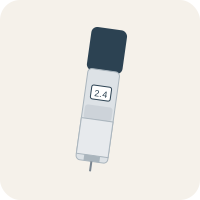
GLP-1 weight management
Wegovy
semaglutide / pronounced [sem a gloo' tide]
Once-weekly injectable semaglutide for chronic weight management. ~15% body weight loss in trials.
- Manufacturer
- Novo Nordisk
- FDA approved
- 2021
- Pivotal efficacy
- 14.9% mean body-weight reduction at 68 weeks · STEP 1 (NCT03548935)
FDA-approved for
- Chronic weight management
- Cardiovascular risk reduction (overweight + established CVD)
FDA Boxed Warning
Risk of thyroid C-cell tumors. Wegovy causes thyroid C-cell tumors in rats. It is unknown whether semaglutide causes thyroid C-cell tumors, including medullary thyroid carcinoma (MTC), in humans. Wegovy is contraindicated in patients with a personal or family history of MTC or in patients with Multiple Endocrine Neoplasia syndrome type 2 (MEN 2).
Why is Wegovy prescribed?
Wegovy is the FDA-approved branded formulation of semaglutide for chronic weight management. Same active ingredient as Ozempic (which is approved for type 2 diabetes), but at the higher 2.4mg weekly dose specifically for weight loss. Novo Nordisk holds the trademark; generic semaglutide is not yet available.
FDA-approved indications:
- Chronic weight management
- Cardiovascular risk reduction (overweight + established CVD)
How does Wegovy work?
Semaglutide mimics GLP-1, a gut hormone released after meals. It slows stomach emptying (you feel full longer), suppresses appetite (reduced food-noise signaling in the brain), and improves insulin sensitivity. The combined effect is sustained appetite reduction and meaningful weight loss for most patients.
Who qualifies for Wegovy?
FDA-approved for adults with BMI ≥30, or BMI ≥27 with a weight-related comorbidity (high blood pressure, prediabetes, sleep apnea, dyslipidemia). Also approved for adolescents 12+ at the 95th percentile BMI. Contraindicated in personal/family history of medullary thyroid cancer or MEN2.
Pre-treatment screening checklist:
- Confirm BMI ≥30, or BMI ≥27 plus a documented weight-related comorbidity (hypertension, dyslipidemia, T2DM, prediabetes, OSA, established CVD)
- Screen for personal or family history of medullary thyroid carcinoma (MTC) or MEN2 — absolute contraindication
- Verify no history of pancreatitis or active gallbladder disease before initiation
- Baseline labs: HbA1c, comprehensive metabolic panel (kidney + liver), TSH if not recently checked
- Confirm no current pregnancy and counsel non-oral or barrier contraception during titration and for 2 months pre-conception
- Review concurrent medications for hypoglycemia risk: insulin, sulfonylureas, meglitinides — dose-reduction may be needed
How should Wegovy be used?
Titrated over 4-5 months: 0.25mg → 0.5mg → 1mg → 1.7mg → 2.4mg, increasing every 4 weeks. Maintenance dose 2.4mg weekly. Slower titration is common to manage GI side effects.
What should I do if I forget a dose?
Wegovy is dosed once weekly. If you miss a dose: take it as soon as possible within 5 days of the scheduled day. If more than 5 days have passed, skip the missed dose and take the next dose on your regular weekly schedule. Do not take two doses to make up for a missed one — doubling up dramatically increases nausea and other GI side effects. If you miss multiple consecutive doses (out for 2+ weeks), contact your prescriber before resuming; you may need to restart at a lower dose to re-tolerate. Set a recurring weekly reminder to minimize misses, especially during early titration when consistent dosing helps the body adapt.
How effective is Wegovy?
14.9% mean body-weight reduction at 68 weeks
- Trial:
- STEP 1 (NCT03548935)
- Comparator:
- vs 2.4% with placebo + lifestyle
- Participants:
- n = 1,961
What side effects can Wegovy cause?
Most common: nausea (especially first 4-8 weeks), constipation, diarrhea, fatigue, headache. Less common: gallbladder issues, pancreatitis (rare), kidney strain if dehydrated. Black-box warning: medullary thyroid cancer risk (theoretical, based on rodent studies). Discontinue and consult clinician for severe abdominal pain or persistent vomiting.
What interactions should clinicians watch for?
Wegovy slows gastric emptying, which can affect absorption of oral medications taken at the same time. Most clinically meaningful interactions: insulin and sulfonylureas (increased hypoglycemia risk when combined; clinicians often reduce these), warfarin (monitor INR more closely during titration), and oral contraceptives (some evidence of reduced effectiveness in patients with severe GI symptoms; use backup method or non-oral contraception). Wegovy does not interact with most antihypertensives, statins, or thyroid hormone at standard doses. Disclose all medications, supplements, and recent vaccines to your prescriber.
What special precautions should I follow?
Pregnancy & lactation
Wegovy is not recommended during pregnancy. Animal studies show developmental harm at exposures relevant to humans; no adequate data exist in pregnant humans. Novo Nordisk advises discontinuing Wegovy at least 2 months before a planned pregnancy because semaglutide's long half-life means it takes 5-6 weeks to clear the system. If you become pregnant unexpectedly while on Wegovy, stop the medication and contact your prescriber promptly. Weight gain during pregnancy is expected and healthy; the goal is fetal development. Wegovy is also not recommended while breastfeeding (excretion in breast milk is unknown but possible). Patients planning fertility treatment should coordinate timing with their reproductive endocrinologist.
Alcohol
Wegovy has no formal contraindication with alcohol, but several factors make moderation important. GLP-1 medications slow gastric emptying — alcohol absorbed on top of delayed gastric emptying hits harder and stays around longer than expected. Alcohol can amplify nausea, reflux, and GI side effects already common during titration. Many patients report reduced alcohol cravings on semaglutide (some find this welcome). Alcohol is a significant calorie source that can offset weight-loss benefit. If you drink, start with very small amounts on a non-titration week to gauge your reaction. Avoid heavy drinking entirely — dehydration + GI side effects + slowed gastric emptying can produce unusually severe hangovers.
What does Wegovy cost?
List price ~$1,350/month without insurance. With Novo Nordisk's patient assistance program, eligible self-pay patients can access at $200-500/month. Insurance coverage is patchy and often requires prior authorization plus a documented weight-related comorbidity.
Cash price
List price approximately $1,350 per 28-day supply at retail pharmacies. Actual cash price often lower at compounding-adjacent dispensaries and discount programs.
With insurance
Commercial insurance coverage varies widely. Tier 2 or Tier 3 placement typical when covered. Prior authorization is standard, often with BMI documentation + 3-6 months of documented lifestyle attempts. Patient copay typically $25–150/month with coverage, but plan-specific exclusions for weight-loss drugs are common.
Savings card
Novo Nordisk's Wegovy Savings Card covers eligible commercial-insured patients down to $25/month for up to 13 fills. Requires commercial coverage that includes Wegovy — does not lower cost when not covered by insurance. Not eligible for Medicare, Medicaid, or government-sponsored plans.
Direct-pay program
NovoCare Pharmacy self-pay offers Wegovy pens at $349/month, and patients with government insurance can also pay the self-pay price. New patients pay $199/month for the first two fills of 0.25 mg and 0.5 mg through December 31, 2026; Wegovy HD is $399/month and the Wegovy pill is $149-299/month by dose.
Patient assistance
Novo Nordisk's Patient Assistance Program (PAP) provides free Wegovy to qualifying uninsured patients with documented income at or below 400% of the federal poverty level. Application via NovoCare.
Brand names (same molecule)
semaglutide is marketed under multiple brand names with different doses or FDA indications.
Ozempic
Same molecule (semaglutide), approved for type 2 diabetes at 0.25–2.0 mg weekly. Sometimes used off-label for weight management at lower-than-Wegovy doses.
Rybelsus
Oral semaglutide tablet form. Approved for type 2 diabetes only — not for chronic weight management. 7 mg or 14 mg daily.
Frequently asked questions
Is Wegovy the same as Ozempic?
Same active ingredient (semaglutide), different brand and different FDA-approved indications. Wegovy is FDA-approved for chronic weight management at a maintenance dose of 2.4 mg weekly. Ozempic is FDA-approved for type 2 diabetes at 0.25–2.0 mg weekly. The molecules are identical; the dosing and labeled use differ. Clinicians sometimes prescribe Ozempic off-label for weight management, though insurance coverage and cost differ markedly.
How quickly will I lose weight on Wegovy?
Weight loss is gradual and titration-dependent. Typical pattern: 1–3% body weight reduction during the first 4 weeks at the 0.25 mg starting dose, then progressively more as the dose escalates. STEP-1 trial participants reached ~10% body weight reduction by week 28 and ~15% by week 68. Individual response varies — about 13% of trial participants had ≤5% weight loss, and about 32% reached ≥20% reduction.
Can I stop Wegovy after I reach my goal weight?
Weight regain after Wegovy discontinuation is common. STEP-4 specifically studied this question and found patients who switched to placebo regained a median of ~7% body weight over the following year, while those continuing semaglutide maintained their losses. Current practice considers Wegovy a chronic medication for chronic disease, similar to antihypertensives — most patients need ongoing treatment to maintain results. Tapering protocols are not formally established; some clinicians titrate down to a lower maintenance dose.
Does Wegovy cause hair loss?
Hair loss appears in 3–5% of trial participants but is not a direct drug effect. The mechanism is telogen effluvium from rapid weight loss — same pattern seen after bariatric surgery, crash diets, or severe illness. Hair follicles temporarily shift from growth phase to resting phase, with shedding visible 3–4 months later. Recovery is typical within 9–12 months. Adequate protein intake (1.2–1.6 g/kg body weight daily) during weight loss helps minimize severity.
Is Wegovy safe long-term?
Long-term safety data extend through the SELECT trial (mean 39-month follow-up) and ongoing post-marketing surveillance. No long-term toxicity signal has emerged. Theoretical thyroid C-cell tumor risk remains a labeled concern (based on rodent data), but no causal human signal has been identified despite millions of patient-years of exposure. Reported risks include gallbladder events (~1–2% absolute), pancreatitis (rare but real), and diabetic retinopathy progression in patients with pre-existing retinopathy. Most patients tolerate treatment beyond 5 years without issue.
Does Wegovy work if I don't exercise?
Yes — Wegovy reduces appetite and body weight independent of exercise level. STEP-1 participants achieved ~15% body weight reduction with a modest lifestyle intervention (counseling + general activity recommendations), not a structured exercise prescription. However, combining Wegovy with resistance training preserves more lean mass and improves cardiometabolic outcomes beyond weight loss alone. Patients who exercise during treatment also report better mood, energy, and adherence.
Will insurance cover Wegovy?
Coverage is improving but still inconsistent. Most commercial insurers now cover Wegovy with prior authorization, typically requiring documented BMI thresholds, weight-related comorbidities, and 3-6 months of attempted lifestyle modification. Medicare Part D does not cover weight-loss medications by federal statute (the 2003 MMA exclusion), so Medicare patients pay out of pocket or rely on PAP. Medicaid coverage varies widely by state. Many employer-sponsored plans exclude weight-loss drugs entirely as a cost-control measure — confirm coverage before initiation.
Clinical pearls
- GI side effects predict longer-term tolerance: patients who handle the first month well usually do fine at every subsequent dose step.
- Pause-and-hold titration is often better than push-through — staying on a dose for 8 weeks instead of 4 dramatically improves adherence rates.
- Counsel patients to set a weekly injection routine (same day, same time) — adherence drops 20–30% when timing is irregular.
- Re-check medication list at each dose escalation — patients often start new oral medications without considering the gastric-emptying delay.
- Use semaglutide cessation as an early signal of plateau-driven discontinuation; pre-emptive conversations about long-term maintenance reduce regain.
- Patients with established cardiovascular disease are eligible for the cardiovascular indication (SELECT trial) — confirm comorbid CVD to expand coverage rationale.
What to ask your prescriber
Bring to your initial appointment to set expectations clearly.
- Am I a candidate for Wegovy specifically (BMI, comorbidities, MTC history)?
- What dose titration schedule do you typically use, and what are early signs we should slow down?
- How will we manage nausea, especially during the first 8 weeks?
- What's your guidance on alcohol, NSAIDs, and oral contraceptives while I'm on this medication?
- If I lose 10–15% of body weight, will we keep me at the maintenance dose, taper, or discontinue?
- What labs will we monitor, and at what intervals?
- What's your approach if insurance denies prior authorization?
- Are there pharmacy options that source the actual brand-name product reliably (vs compounded alternatives)?
In case of emergency or overdose
There is no specific antidote for semaglutide overdose. Because of the long half-life (~1 week), monitoring and supportive care may need to continue for days. Contact the US Poison Control Center at 1-800-222-1222 immediately, or seek emergency care for severe hypoglycemia (especially if you also take insulin or a sulfonylurea), persistent vomiting, signs of dehydration, or any altered mental status. Note the time of the missed extra dose, the dose strength, and any other medications you take when you call.
How should Wegovy be stored?
Refrigerate Wegovy pens between 36°F and 46°F (2°C to 8°C). Do not freeze. After first use, store in refrigerator or at room temperature up to 86°F (30°C) for up to 28 days. Protect from direct light. Discard pens stored at room temperature for more than 28 days or any pen that has been frozen. Used needles go in an FDA-cleared sharps container; check your municipality's sharps disposal program.
Primary sources
- [1] FDA-approved Wegovy (semaglutide) prescribing information
- [2] STEP-1: Once-weekly semaglutide in adults with overweight or obesity (NEJM, 2021)
- [3] STEP-4: Effect of continued weekly subcutaneous semaglutide vs placebo on weight loss maintenance (JAMA, 2021)
- [4] Novo Nordisk Wegovy product information
- [5] NovoCare self-pay program eligibility
- [6] American Heart Association: Obesity and cardiovascular disease scientific statement
Related clinical resources
What clinicians say
Quotes from published interviews, peer-reviewed commentary, and conference presentations. Each is attributed and linked to the original source.
“Once-weekly subcutaneous semaglutide at a dose of 2.4 mg, plus lifestyle intervention, was associated with substantial, sustained, clinically relevant reduction in body weight in participants with overweight or obesity.”
Source: New England Journal of Medicine — STEP 1 trial publication (Once-Weekly Semaglutide in Adults with Overweight or Obesity) (March 2021 — DOI 10.1056/NEJMoa2032183)
“In patients with preexisting cardiovascular disease and overweight or obesity but without diabetes, weekly subcutaneous semaglutide at a dose of 2.4 mg was superior to placebo in reducing the incidence of death from cardiovascular causes, nonfatal myocardial infarction, or nonfatal stroke.”
Source: New England Journal of Medicine — SELECT trial publication (Semaglutide and Cardiovascular Outcomes in Obesity without Diabetes) (December 2023 — DOI 10.1056/NEJMoa2307563)
“Wegovy causes thyroid C-cell tumors in rats. It is unknown whether Wegovy causes such tumors, including medullary thyroid carcinoma, in humans. Wegovy is contraindicated in patients with a personal or family history of MTC or in patients with Multiple Endocrine Neoplasia syndrome type 2.”
Source: FDA-approved Wegovy (semaglutide) prescribing information — current label (Approved June 2021; current label 2024)