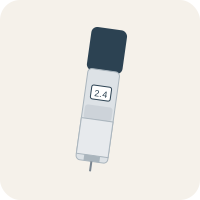
GLP-1 weight management
Zepbound
tirzepatide / pronounced [tir zep' a tide]
Dual GLP-1/GIP agonist for weight management. ~20% body weight loss in trials — strongest weight-loss drug currently available.
- Manufacturer
- Eli Lilly
- FDA approved
- 2023
- Pivotal efficacy
- 20.9% mean body-weight reduction at 72 weeks (15 mg dose) · SURMOUNT-1 (NCT04184622)
FDA-approved for
- Chronic weight management
- Obstructive sleep apnea (moderate-to-severe, with obesity)
FDA Boxed Warning
Risk of thyroid C-cell tumors. Tirzepatide causes thyroid C-cell tumors in rats. It is unknown whether tirzepatide causes such tumors, including medullary thyroid carcinoma (MTC), in humans. Zepbound is contraindicated in patients with a personal or family history of MTC or in patients with Multiple Endocrine Neoplasia syndrome type 2 (MEN 2).
Why is Zepbound prescribed?
Zepbound is the FDA-approved branded formulation of tirzepatide for chronic weight management. Same active ingredient as Mounjaro (approved for diabetes), at weight-loss doses 2.5-15mg weekly. Eli Lilly holds the trademark.
FDA-approved indications:
- Chronic weight management
- Obstructive sleep apnea (moderate-to-severe, with obesity)
How does Zepbound work?
Tirzepatide is a dual incretin agonist: it hits both the GLP-1 receptor (like semaglutide) and the GIP receptor (which semaglutide doesn't). The combination produces stronger appetite suppression and better glycemic effect than GLP-1 alone, which translates to more weight loss in head-to-head trials (SURMOUNT studies showed ~20% body weight loss at the 15mg dose).
Who qualifies for Zepbound?
Same indications as Wegovy: BMI ≥30, or BMI ≥27 with a weight-related comorbidity. Contraindicated in personal/family history of medullary thyroid cancer or MEN2.
Pre-treatment screening checklist:
- Confirm BMI ≥30, or BMI ≥27 plus a documented weight-related comorbidity
- Screen for personal or family history of medullary thyroid carcinoma (MTC) or MEN2 — contraindication
- Verify no prior pancreatitis history; check baseline lipase if uncertain
- Baseline labs: HbA1c, CMP (kidney + liver), TSH
- Confirm no current pregnancy; counsel non-oral or barrier contraception during titration
- Review concurrent oral medications — tirzepatide reduces oral contraceptive AUC; non-oral or barrier method recommended for 4 weeks after start and after each escalation
How should Zepbound be used?
Titrated 2.5mg → 5mg → 7.5mg → 10mg → 12.5mg → 15mg, every 4 weeks. Maintenance 5-15mg weekly depending on tolerability and target weight.
What should I do if I forget a dose?
Zepbound is dosed once weekly. If you miss a dose: take it within 4 days of the scheduled day. If more than 4 days have passed, skip and resume the regular weekly schedule on your next dosing day. Do not double up. After missed doses, side effects may be more pronounced on resuming — this is normal as the body re-acclimates. If you miss 2+ consecutive doses, contact your prescriber; restart at a lower dose may be appropriate. Consistency matters most during the first 12-16 weeks of titration.
How effective is Zepbound?
20.9% mean body-weight reduction at 72 weeks (15 mg dose)
- Trial:
- SURMOUNT-1 (NCT04184622)
- Comparator:
- vs 3.1% with placebo
- Participants:
- n = 2,539
What side effects can Zepbound cause?
Similar profile to semaglutide: nausea, constipation, diarrhea, fatigue. Some patients report stronger GI side effects than Wegovy at equivalent body-weight-loss-effectiveness doses; others tolerate it better. Same MTC/MEN2 contraindication.
What interactions should clinicians watch for?
Tirzepatide slows gastric emptying similarly to semaglutide; same caution applies to oral medications taken concurrently. Most clinically meaningful interactions: insulin and sulfonylureas (increased hypoglycemia risk), oral contraceptives (manufacturer recommends switching to non-oral or adding barrier method for 4 weeks after starting and 4 weeks after each dose escalation due to delayed absorption), warfarin (closer INR monitoring). No major interactions with statins, antihypertensives, or levothyroxine at standard doses. Always disclose full medication list to prescriber.
What special precautions should I follow?
Pregnancy & lactation
Zepbound is not recommended during pregnancy. Animal studies show developmental harm; no adequate human data. Eli Lilly advises discontinuing tirzepatide at least 1-2 months before planned pregnancy (tirzepatide half-life ~5 days, plus margin). If you become pregnant unexpectedly on Zepbound, stop the medication and contact your prescriber promptly. Not recommended while breastfeeding. The oral contraceptive interaction (delayed absorption from slowed gastric emptying) is a real fertility-planning consideration — use non-oral contraception while on Zepbound if pregnancy is not desired.
Alcohol
No formal contraindication, but the same considerations as Wegovy apply: slowed gastric emptying changes how alcohol is absorbed, GI side effects can amplify, hangovers can be more severe. Some patients report stronger reduction in alcohol cravings on tirzepatide than on semaglutide — possibly due to the dual GLP-1/GIP receptor activity. If you drink, moderate amounts on a non-titration week. Avoid heavy drinking during the first 4-8 weeks of any dose escalation when GI symptoms are most pronounced.
What does Zepbound cost?
List price ~$1,000-1,300/month. Lilly's patient assistance program (LillyDirect Self-Pay) offers $399-549/month for self-pay patients depending on dose. Insurance coverage similar pattern to Wegovy.
Cash price
List price approximately $1,000–1,300 per 28-day supply at retail pharmacies, varying by dose strength.
With insurance
Commercial insurance coverage expanding through 2025–2026. Tier 2 or Tier 3 placement typical when covered. Prior authorization standard, often requiring BMI + comorbidity documentation. Some plans exclude weight-loss drugs entirely.
Savings card
Lilly's Zepbound Savings Card can lower the cost to $25/month for the single-dose pen, with savings capped at $100/month and $1,300/year, through December 31, 2026. Requires commercial coverage that includes Zepbound. Not eligible for Medicare, Medicaid, or government plans.
Direct-pay program
LillyDirect self-pay offers Zepbound vials at $299 (2.5 mg), $399 (5 mg), and $449 (7.5-15 mg) per month when refilled within 45 days; otherwise $499 (7.5 mg) to $699 (10-15 mg).
Patient assistance
Lilly Cares Foundation Patient Assistance Program may cover Zepbound for qualifying uninsured patients at or below 400% of the federal poverty level. Application via lillycares.com.
Brand names (same molecule)
tirzepatide is marketed under multiple brand names with different doses or FDA indications.
Mounjaro
Same molecule (tirzepatide), FDA-approved for type 2 diabetes at 2.5–15 mg weekly. Same dose ladder, different indication. Often used off-label for weight management.
Frequently asked questions
Is Zepbound stronger than Wegovy?
In trial-grade comparisons, tirzepatide produces greater body-weight reduction than semaglutide on average: ~20% at 72 weeks (SURMOUNT-1) vs ~15% at 68 weeks (STEP-1). Individual response varies — some patients respond better to one molecule than the other. The mechanism difference (tirzepatide hits both GLP-1 and GIP receptors; semaglutide only GLP-1) is the leading hypothesis for the efficacy difference, though long-term head-to-head trials remain limited.
How is Zepbound different from Mounjaro?
Same active ingredient (tirzepatide), same dose strengths, same titration schedule, different FDA-approved indications. Mounjaro is approved for type 2 diabetes; Zepbound is approved for chronic weight management and (since late 2024) moderate-to-severe obstructive sleep apnea in adults with obesity. The pen device and dose ladder are identical. Coverage and pricing differ by indication.
How long does Zepbound take to work?
Appetite reduction often begins within 1–2 weeks of starting the 2.5 mg dose. Measurable weight loss typically appears by week 4. Trial participants achieved ~6% body weight loss by week 12, ~15% by week 28, and ~20% by week 72 at the 15 mg maintenance dose. Steady weekly weight loss of 1–2 lbs is typical during active titration.
Can I switch from Wegovy to Zepbound?
Yes, with clinician oversight. Most clinicians start tirzepatide at 2.5 mg weekly regardless of prior semaglutide dose — the molecules differ, and starting low reduces side-effect risk during the transition. Allow 1 week from the last Wegovy dose before starting Zepbound. Insurance considerations differ between drugs; check coverage before switching mid-prescription.
Does Zepbound cause more side effects than Wegovy?
Trial data show similar overall side-effect rates between tirzepatide and semaglutide. Anecdotally, some patients report stronger nausea on tirzepatide at equipotent weight-loss doses; others tolerate it better. The dual-receptor mechanism may produce a different GI symptom profile. Slower titration (8 weeks per step instead of 4) often improves tolerance dramatically.
Will my insurance cover Zepbound?
Coverage is improving rapidly through 2025–2026 as more plans add weight-management coverage. Most commercial plans now cover Zepbound with prior authorization — typically requiring BMI documentation, comorbidity, and prior lifestyle attempts. Medicare Part D does not cover weight-loss drugs by statute. State Medicaid coverage varies. Many employer-sponsored plans exclude weight-loss medications; check before initiation.
Does Zepbound work for sleep apnea?
Yes — Zepbound received FDA approval in late 2024 for moderate-to-severe obstructive sleep apnea in adults with obesity, based on the SURMOUNT-OSA trials. Mechanism: weight loss reduces upper-airway soft-tissue obstruction, often improving or resolving OSA. Patients with documented OSA may have a more straightforward insurance pathway under the OSA indication than under obesity alone.
Clinical pearls
- Pace titration deliberately — 8-week dose holds dramatically reduce GI dropouts vs 4-week schedule.
- Counsel oral-contraceptive users specifically: tirzepatide delays absorption and can reduce contraceptive efficacy. Recommend non-oral or barrier method for 4 weeks after start and after each escalation.
- OSA indication opens a separate insurance pathway — confirm documented OSA history when relevant, may simplify approval.
- Patients switching from Wegovy: start tirzepatide at 2.5 mg, not equivalent dose. The molecules differ; cross-titration is not formally established.
- Re-check lipase if abdominal symptoms emerge — pancreatitis is rare but real, and early detection matters.
- Watch for sustained weight loss plateaus — 12 weeks without progress at a stable dose is a signal to revisit dose, adherence, or co-interventions.
What to ask your prescriber
Bring to your initial appointment to set expectations clearly.
- Am I a candidate for tirzepatide (BMI, MTC history, OSA status)?
- What dose escalation schedule will we use — every 4 weeks or extended 8 weeks?
- How will we manage nausea, especially during the first 8 weeks of treatment?
- What's your guidance on alcohol, NSAIDs, and oral contraceptives?
- If I have OSA, will we submit prior authorization under the OSA indication or obesity indication?
- What labs will we monitor and at what intervals?
- What's your plan if I plateau at a particular dose before reaching 15 mg?
- Are there pharmacy options that source brand-name Zepbound reliably (vs compounded tirzepatide)?
In case of emergency or overdose
There is no specific antidote for tirzepatide overdose. The drug has a half-life of ~5 days, so monitoring may need to continue for over a week. Call US Poison Control at 1-800-222-1222 immediately or go to the emergency room for severe hypoglycemia (higher risk if combined with insulin or a sulfonylurea), persistent vomiting, dehydration signs, or altered mental status. Bring the pen and packaging if you go to the ER.
How should Zepbound be stored?
Refrigerate Zepbound pens between 36°F and 46°F (2°C to 8°C) in original carton until use. Do not freeze. After first use, may be stored at room temperature up to 86°F (30°C) for up to 21 days. Protect from light. Discard pens stored at room temperature for more than 21 days or any pen exposed to freezing temperatures.
Primary sources
- [1] FDA-approved Zepbound (tirzepatide) prescribing information
- [2] SURMOUNT-1: Tirzepatide once weekly for treatment of obesity (NEJM, 2022)
- [3] SURMOUNT-5 head-to-head: tirzepatide vs semaglutide for weight reduction (NEJM, 2025)
- [4] Eli Lilly Zepbound product information
- [5] LillyDirect Self-Pay program
Related clinical resources
What clinicians say
Quotes from published interviews, peer-reviewed commentary, and conference presentations. Each is attributed and linked to the original source.
“In this 72-week trial in participants with obesity, 5 mg, 10 mg, or 15 mg of tirzepatide once weekly provided substantial and sustained reductions in body weight.”
Source: New England Journal of Medicine — SURMOUNT-1 trial publication (Tirzepatide Once Weekly for the Treatment of Obesity) (July 2022 — DOI 10.1056/NEJMoa2206038)
“Tirzepatide causes thyroid C-cell tumors in rats. It is unknown whether tirzepatide causes such tumors, including medullary thyroid carcinoma, in humans. Zepbound is contraindicated in patients with a personal or family history of MTC or in patients with Multiple Endocrine Neoplasia syndrome type 2.”
Source: FDA-approved Zepbound (tirzepatide) prescribing information — current label (Approved November 2023; current label 2024)